The Seasons (Horae) Coloring Pages
The Horae were Greek goddesses but not Olympians (the main gods of Greece). They were the goddesses of the Seasons, and they acted as handmaidens to Aphrodite.
The interesting thing to me is that the Greeks weren't talking about our modern four seasons. They divided the agricultural year in their area into three goddesses: Thallo, Auxo, and Carpo.
The Greeks considered winter to be when the Seasons slept rather than a season itself!
In most tellings the Horae were sisters, the daughters of Zeus and the Titan Themis. Besides looking after the year, they guarded the gates of Olympus, moving the clouds aside to let the gods in and out.

Thallo was the goddess of spring. Her name is related to a Greek word for a young green shoot, so she's the one who gets the flowers and new leaves started. Reach for your fresh greens and bright pinks.

Auxo was the goddess of summer growth. Her name is linked to the Greek word for increase, and she watched over the crops as they grew tall and ripened. Summer wheat was the main crop in Greece, so golden yellows and warm browns suit her.

Carpo was the goddess of fruit and the harvest. Her name is the Greek word for fruit, and she was the one who made sure it was ripe and ready to pick. Grapes, figs, and pomegranates were all part of a Greek harvest, so this page has plenty of room for rich purples and reds.

Print the story of the Birth of Aphrodite (includes The Seasons) with coloring pages (PDF)
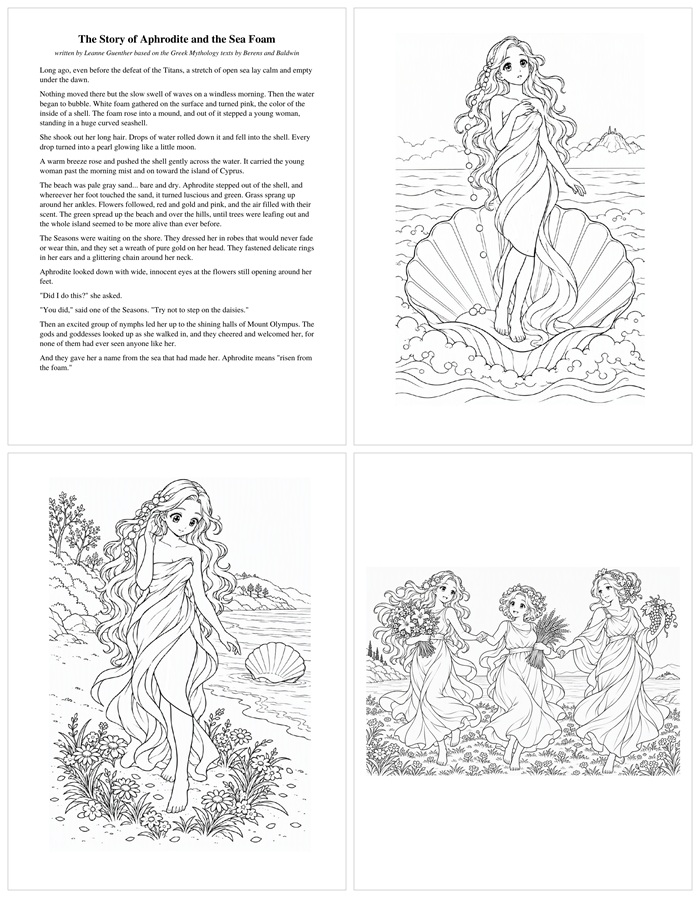
Three were waiting on the shore when she stepped out of the shell. Robes that would never fade, a golden wreath, and a glittering chain were ready, and the Seasons had a few words for the newcomer. One of them was very worried about the daisies...
More about the Horae
The names Thallo, Auxo, and Carpo are the ones people in the city of Athens used for the Horae, and they match the farming year. Not everyone agreed on the names, though.
The poet Hesiod wrote about three Horae with very different jobs: Eunomia (good order), Dike (justice), and Eirene (peace). Same sisters, two different ideas of what they stood for. That's one of the fun things about Greek myth. Different tellers often had their own version.