Sidhe (Aos Sí) Coloring Pages
Picture a round green hill in Ireland with a door in it that you can't see. Behind that door is a whole other world, and it's where the Sidhe (say "shee") are said to live.
Sidhe is the old word for those hills and mounds, so the people living inside them are the Aos Sí, "the people of the mounds." Lots of folks just call them fairies, but the old Irish stories often describe them as tall, graceful and very beautiful, nothing like the tiny winged sprites in picture books. You'll find both kinds below.
The People Under the Hills
Nobody's quite sure who the Sidhe were supposed to be, and that's part of the fun. In some stories they're the Tuatha Dé Danann, a magical people who ruled Ireland in ancient times. The Tuatha Dé Danann lost the land above ground, so they moved underground into the hills. In other stories the Aos Sí are ancestors, or spirits of nature, or even gods and goddesses.
Aos Sí means "people of the fairy mounds" in Irish, and in Scottish Gaelic they're the daoine sìth, which means pretty much the same thing. The name tells you where to find them!


Fairy Forts, Hawthorn Trees and Hidden Doors
All over Ireland there are old grassy mounds and round earthen rings that people call fairy forts, or raths. Some are ancient burial mounds and some are the leftovers of long-ago farms, but the stories say they're doorways to the Otherworld. Plenty of farmers have always left them alone, just in case somebody was home.
A lone hawthorn tree growing in the middle of a field gets the same treatment. Nobody wants to be the one who chops down a fairy tree.


Be Polite to the Good People
People who believed in the Sidhe worked hard to stay on their good side. Some wouldn't even say the word "fairy" and called them the Good People or the Gentry instead, just to be safe. They left out little gifts of milk, butter or bread, and the stories say the Sidhe were busiest at Samhain, the old festival that Halloween grew out of, when the doors in the mounds were said to swing open.
The Sidhe could be generous friends or fierce enemies, so most people decided it was best to be polite.


Riding Out on White Horses
In the old stories the Sidhe are wonderful riders, and their horses are often white. The most famous rider is Niamh of the Golden Hair, from Tír na nÓg, the Land of the Young. She came galloping over the waves to find a hero named Oisín, the son of Fionn mac Cumhaill, and carried him home with her.
Oisín was happy there for what felt like three years, but when he finally went back to Ireland, three hundred years had gone by. Niamh had warned him never to touch the ground. He did anyway, and in an instant he was an old, old man.


Cousins of the Sidhe
A lot of Ireland's best-known creatures belong somewhere on the Sidhe family tree. The Aos Si are kind of like the royalty of the group, living together in their magical fairy mounds... their cousins are more solitary creatures.


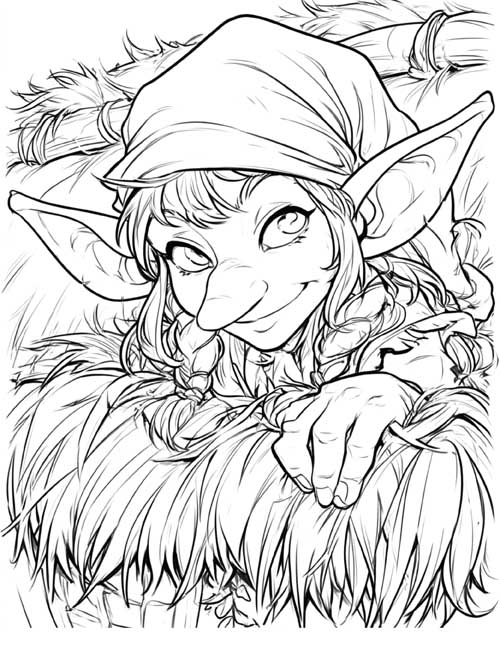


Lianhan Shee (Fairy Sweetheart)
Most of the Sidhe lived together in the mounds, but the Lianhan Shee went about on her own. Her name means "sweetheart from the Sidhe," and she chose poets and harpers to love, then filled their heads with the most beautiful songs they'd ever written. It sounds like a wonderful gift, but there was a catch, and it wasn't a small one.
Celtic Cousins from Wales
Wales has fairy folk of its own. The Welsh call them the Tylwyth Teg, "the fair family," and like the Sidhe they're beautiful, they love music and dancing, and it's smart to stay on their good side. Families used to sweep the hearth and leave out a bowl of clean water at night to keep them happy. A ring of darker grass in a field was said to mark where they'd been dancing, and anyone who stepped inside might join a dance that lasted a whole year.
The Lady of the Lake

Some Welsh fairy women lived under lakes instead of hills. The most famous lake lady of all shows up in the King Arthur stories, where she raises the knight Lancelot in her home beneath the water and gives Arthur his sword, Excalibur. When Arthur's last battle was over, that sword had to go back to her...
Lady of the Lake coloring pages
Morgan le Fay

Morgan's name means "Morgan the fairy." In some stories she's Arthur's troublemaking half-sister, and in others she's a healer queen who carries him away to the magical island of Avalon...
How the Sidhe Got Tiny and Grew Wings
If you picture a fairy as a pocket-sized girl with butterfly wings, you can thank a few hundred years of storytellers and artists. The old Irish stories didn't describe the Sidhe that way at all: they were tall, they were grand, and they didn't usually have wings. The shrinking started in the 1590s, when Shakespeare put fairies small enough to live among the flowers into A Midsummer Night's Dream. Victorian painters and illustrators loved the idea and kept going, giving their fairies delicate butterfly and dragonfly wings.
Then in 1904 the play Peter Pan introduced Tinker Bell, a tiny fairy who's mostly a flash of light and a very bad temper. Movies and cartoons did the rest, and she became the fairy that most people think of first.


