Famous Works of Art Coloring Pages
Welcome to my Famous Works of Art coloring pages section.
Georgia O'Keeffe painted flowers so close up that a single petal fills the whole canvas. Katsushika Hokusai drew a giant wave that towers over tiny boats, with Mount Fuji shrunk to a small peak behind it. Vincent van Gogh used thick, swirly brushstrokes you can almost feel just by looking.
Artists spend ages deciding which colors sit side by side. A red next to a green looks brighter than either one does alone, and that's a trick painters have used for hundreds of years.
Jump to: Before 1800 | The 1800s | Early 1900s | Modern Art
Before 1800
Mona Lisa
Leonardo da Vinci started the Mona Lisa around 1503 and kept working on her for years. He never handed her over to the man who asked for the portrait. In 1911 she was stolen from the Louvre in Paris, and the two years she spent missing made her the most famous painting in the world. Artists have been copying and reimagining her ever since.


Pine Tree Screen

Hasegawa Tohaku painted these pines in black ink in Japan in the late 1500s, across a pair of folding screens with six panels each. He left big parts of the paper completely bare. Your eyes fill in those empty spaces as fog, so the trees seem to drift in and out of the mist. Today the screens are a national treasure of Japan.
Girl with a Pearl Earring
Johannes Vermeer painted her around 1665, and she's so famous that people call her the Mona Lisa of the North. Yet nobody knows who she was, or even whether that huge pearl was a real one.
The Swing
Jean-Honoré Fragonard painted The Swing around 1767, when French painters loved frilly dresses and gardens bursting with flowers. That style is called Rococo. Watch the young woman's foot: her little shoe has just gone flying off into the air.
The 1800s
The Great Wave off Kanagawa
Mount Fuji is the tallest mountain in Japan, but Hokusai made it look like a tiny bump beside his giant wave. The foam at the top of the wave curls like fingers reaching for the three little boats below. It's a woodblock print from around 1831.
A Sunday Afternoon on the Island of La Grande Jatte
Georges Seurat painted this park scene beside the Seine in thousands of tiny dots of color that your eye blends together from far away. The style is called pointillism, and the painting took him about two years. The woman in front has a pet monkey, and you can spot it at her feet.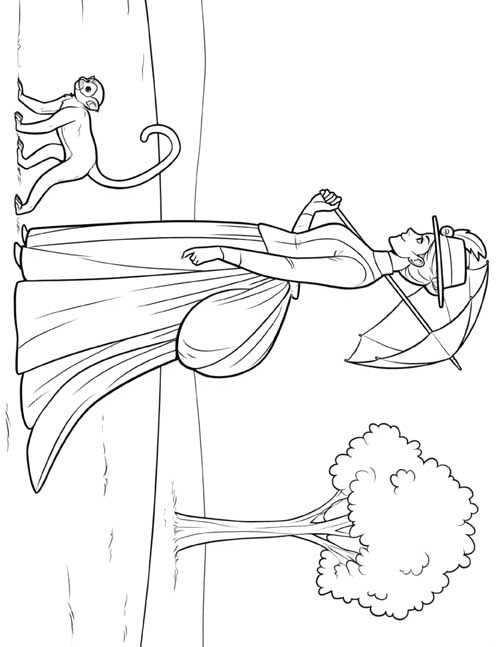
The Lady of Shalott
John William Waterhouse painted The Lady of Shalott in 1888, from a poem by Alfred, Lord Tennyson. In the poem, a lady under a curse can only see the world through a mirror while she weaves. When she finally looks out the window at Sir Lancelot riding past, the curse falls, and she sets off in a boat down the river toward Camelot. Waterhouse liked her story so much that he painted her three times.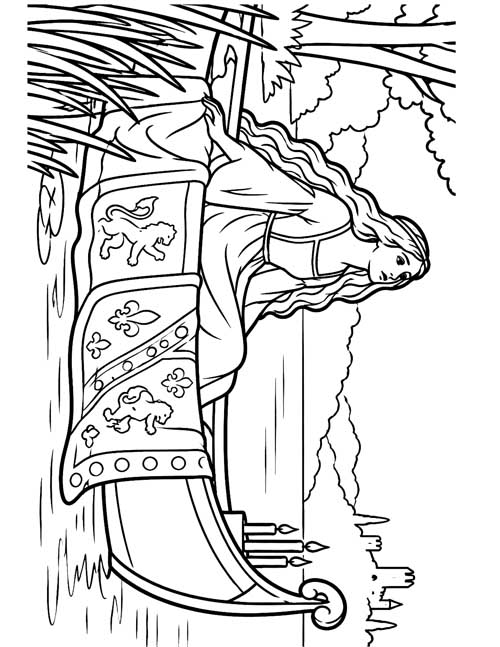
Sunflowers
Van Gogh painted his sunflowers in 1888 to brighten up his little yellow house in Arles before his friend Paul Gauguin came to stay. He loved them so much that he once wrote that the sunflower was, in a way, his own flower.
Sunflower Field

Van Gogh spent the summer of 1888 painting the countryside around Arles in the south of France. He set up his easel right out in the fields, working in the blazing sun on wheat fields, harvests and big open skies.
Starry Night
Van Gogh painted The Starry Night in 1889 from the view outside his window, but he painted it in the daytime, from memory. Scientists have even compared the swirls in his sky to the way real air and water swirl.
The Mulberry Tree

Van Gogh painted this mulberry tree in October 1889, when its leaves had turned bright yellow for autumn. He used thick, curly brushstrokes, so the whole tree looks like it's blowing in the wind.
The Scream
Edvard Munch painted The Scream in 1893, after a walk at sunset when the sky turned blood red. He said he felt a scream passing through nature, so the figure on the bridge may not be the one screaming at all. It's covering its ears to block the scream out.
Early 1900s
Water Lilies
Claude Monet had a pond dug in his garden at Giverny, filled it with water lilies and painted it about 250 times. He wasn't really painting the flowers. He was painting the light and the reflections of the sky on the water, which changed every hour of the day.
The Tree of Life
Gustav Klimt designed The Tree of Life in the early 1900s as a wall decoration for a family's dining room, made from mosaic tiles, marble and real gold. Its branches curl round and round into hundreds of spirals, and a black bird perches in the middle of them all.
Gray Tree

In 1911 Piet Mondrian painted a tree in shades of gray, with its branches turning into a web of curved lines. He kept making things simpler. Within about ten years he was painting nothing but straight black lines and blocks of red, yellow and blue, the paintings he's famous for today.
Mondrian Grid

This is where Mondrian's trees ended up. By the 1920s his paintings were nothing but thick black lines, white spaces and blocks of the three primary colors: red, yellow and blue. No curves, no green, nothing slanted. He was so strict about straight lines that he's said to have fallen out with a fellow artist who started painting diagonals.
Lawrence Tree

Georgia O'Keeffe painted this pine in 1929 at a ranch in New Mexico. She lay on a bench under the tree and looked straight up through its branches at the night sky. The view is so unusual that the museum that owns it hung it upside down for years.
American Gothic
Grant Wood painted American Gothic in 1930 after spotting a little white farmhouse in Eldon, Iowa, with a pointed, church-style window upstairs. That window style gave the painting its name. The serious pair in front weren't farmers at all. They were his sister Nan and his dentist. Lots of people think they're husband and wife, but Wood said he pictured a farmer and his daughter.
Forest

Emily Carr painted the giant forests of British Columbia, on Canada's west coast, where the trees grow so tall the woods stay dim even at noon. She went sketching in an old camper trailer she called the Elephant, along with her dogs and a pet monkey named Woo.
Modern Art
Campbell's Soup Cans
In 1962 Andy Warhol painted thirty-two soup cans, one for every flavour Campbell's sold at the time, and showed them lined up like groceries on a shelf. Some people laughed at the idea that a soup can could be art. It became one of the most famous Pop Art pictures, a style that turns everyday things like soup cans and comic strips into art.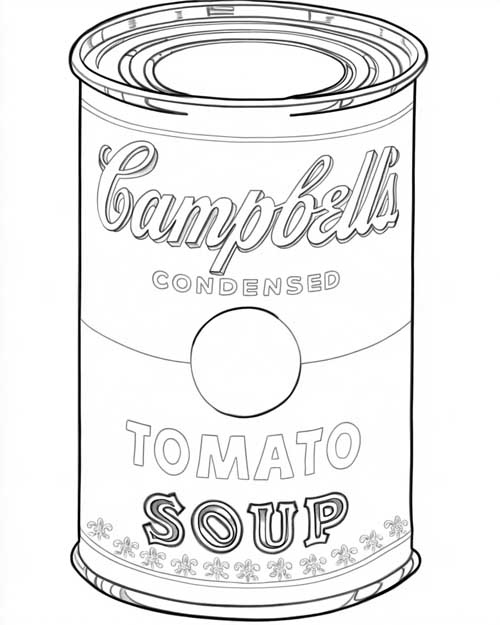
Polka Dot Squash
Yayoi Kusama has been covering things in polka dots since she was a girl: pumpkins, whole rooms, even her own clothes. Her giant yellow polka dot pumpkin on the Japanese island of Naoshima is so loved that when a storm washed it into the sea in 2021, it was rebuilt and put back.
Single Line Dove

This dove isn't a real Picasso. It's a single line drawing in his style, since his work is still under copyright.
Pablo Picasso loved finding out how little it takes to draw something. He once drew a bull over and over, taking away details each time until only a few lines were left. He also drew animals in one flowing line without lifting his pen, and this dove is drawn the same way.
It's a really fun style to try: pick an animal and see if you can draw it without lifting your pencil.
Artists have been setting up easels in museums to copy the masters for hundreds of years. It's how a lot of them learned to paint.
Most of the pictures on this page broke a rule when they were new. Mondrian turned a tree into a few lines and a grid. Seurat built a whole park out of tiny dots. Warhol painted soup cans. Kusama covered a squash in polka dots. Van Gogh painted a night sky that swirls like water. The Mona Lisa has been copied, joked about and reimagined for over 500 years, and she still gets a fresh look from every artist who tries her.